South Korea
| Country of origin | South Korea |
|---|---|
| First created | 1983 |
| Original use | Football club |
| League | K League 1 |
| Home stadium | Seoul World Cup Stadium |
| Club colours | Red, black |
| Nicknames | The Reds |
Origin and history
South Korea, officially the Republic of Korea, is a nation located on the southern portion of the Korean Peninsula in East Asia. Its modern political entity was formally established in the late 1940s following the post-World War II division of Korea. The peninsula itself has a long and continuous history of unified kingdoms, such as Silla and Goryeo, dating back over a millennium. The contemporary state emerged from the devastation of the Korean War in the early 1950s, which solidified the division along the Demilitarized Zone. The subsequent decades saw a period of rapid industrialization and economic development, often termed the "Miracle on the Han River." This transformation from a war-torn agrarian society to a major global economy forms the critical backdrop for its modern sporting culture and ambitions.
What it is for
Within the context of Asian football, South Korea serves as a member association of the Asian Football Confederation (AFC) and a sovereign nation that fields national teams in AFC competitions. The Korea Football Association (KFA) is the governing body responsible for organizing and developing football within the country. Its primary functions are to manage the senior men's and women's national teams, oversee the domestic professional league structure, and promote the sport at all grassroots levels. The system exists to compete for continental honors such as the AFC Asian Cup and to qualify for global tournaments like the FIFA World Cup. Furthermore, it provides a structured pathway for domestic player development and hosts professional club competitions that participate in the AFC Champions League. The entire football apparatus is a point of significant national pride and a major component of the country's cultural exports.
Overview
South Korea is one of the most successful and influential football nations in the Asian confederation. The men's national team, nicknamed the "Taeguk Warriors," has qualified for every FIFA World Cup since 1986 and achieved a historic semi-final finish in 2002. Domestically, the K League is the top-tier professional competition, founded in the early 1980s as one of Asia's first professional leagues. The league system includes multiple divisions with promotion and relegation, fostering competitive depth. South Korean clubs have consistently been strong contenders in the AFC Champions League, with several clubs winning the title. The women's national team is also a consistent Asian powerhouse, regularly qualifying for the FIFA Women's World Cup. The country has a well-established football infrastructure, including dedicated stadiums and youth academies, supporting its status.
What to know
The playing style of South Korean national teams and top clubs is historically characterized by exceptional physical fitness, relentless pressing, and high work rate. South Korea is a major exporter of footballing talent, with numerous players having successful careers in top European leagues, which in turn elevates the national team's quality. The domestic K League has a strict salary cap and squad registration rules designed to ensure financial stability and competitive balance, differing from some other Asian leagues. Matches between club rivals, such as the "Super Match" between FC Seoul and Suwon Samsung Bluewings, feature intense atmospheres. The national team's most enduring rivalry is with Japan, with matches carrying significant historical and sporting weight beyond football. Qualification paths for South Korean clubs to the AFC Champions League are determined by their final standings in the K League and performance in the national cup competition, the Korean FA Cup.
Common questions
A common question is why South Korea is so consistently strong in Asian football compared to its population size, often attributed to systemic youth development and the cultural emphasis on discipline and hard work. People often ask about the impact of mandatory military service on players' careers, which has led to the creation of the military-affiliated club Gimcheon Sangmu as a temporary team for conscripted players. Many inquire about the best way to watch K League matches, which are broadcast internationally through various streaming services and dedicated sports channels. Questions frequently arise regarding the most successful club, with Jeonbuk Hyundai Motors holding multiple K League and AFC Champions League titles. Fans commonly ask about the next generation of stars following the era of Son Heung-min, pointing to emerging talents in Europe and the domestic league. Another frequent topic is the potential for a unified Korean team in future competitions, a concept that remains a complex political and sporting discussion.
Pros and cons
A significant pro is the system's proven ability to develop technically sound and physically robust players capable of succeeding at the highest international levels. The league's financial regulations promote sustainability and prevent the kind of inflationary spending that has destabilized other competitions. A notable con is that the K League's salary cap and lower financial scale compared to other Asian leagues can make it difficult to retain top domestic talent and attract elite foreign players in their prime. Some fans regret that this can lead to a perceived lack of star power and occasional predictability in the domestic title race. The intense physical demands and high-pressure environment within the development system can also lead to player burnout and a high attrition rate for young prospects. A common mistake by observers is underestimating K League teams in continental competition due to their lower commercial profile, despite their consistent tactical organization and strong results.
Who it suits
This footballing nation suits fans who appreciate disciplined, organized, and high-energy team play over individualistic flair. It appeals to those interested in player development pathways and the business of football exports from Asia to Europe. The K League suits supporters who prefer a more community-oriented and financially stable league model, even if it comes with less global glamour. It is ideal for followers of Asian football who want to track a consistent contender in AFC competitions and a national team that is a perennial World Cup participant. The ecosystem suits analysts who are interested in how systemic training, national service policies, and cultural factors intersect with sporting performance. It is less suited to viewers seeking a league dominated by global superstars or one with frequent, high-profile transfer drama.
Latest South Korea news
Latest reporting
Spain win U-20 Women's World Cup on penalties after goalless draw
Spain defeated DPR Korea 4-3 on penalties after a 0-0 draw in Lodz to win the FIFA U-20 Women's World Cup 2026.
Tractor FC Extends Lead in Iran Pro League
Tractor FC maintained their unbeaten start to the Iran Pro League season, moving four points clear. Elsewhere in Central and South Asia, PFC Nasaf...

Uruguay name 46-man squad for Asian tour
Head coach Diego Forlan has selected a 46-player provisional squad for Uruguay's upcoming friendlies against Japan, South Korea, and India in...
DPR Korea edge Iran in stoppage time to lead U20 Asian Cup qualifying group
DPR Korea scored twice in added time to beat Iran 2-1, moving top of their AFC U20 Asian Cup qualifying group.
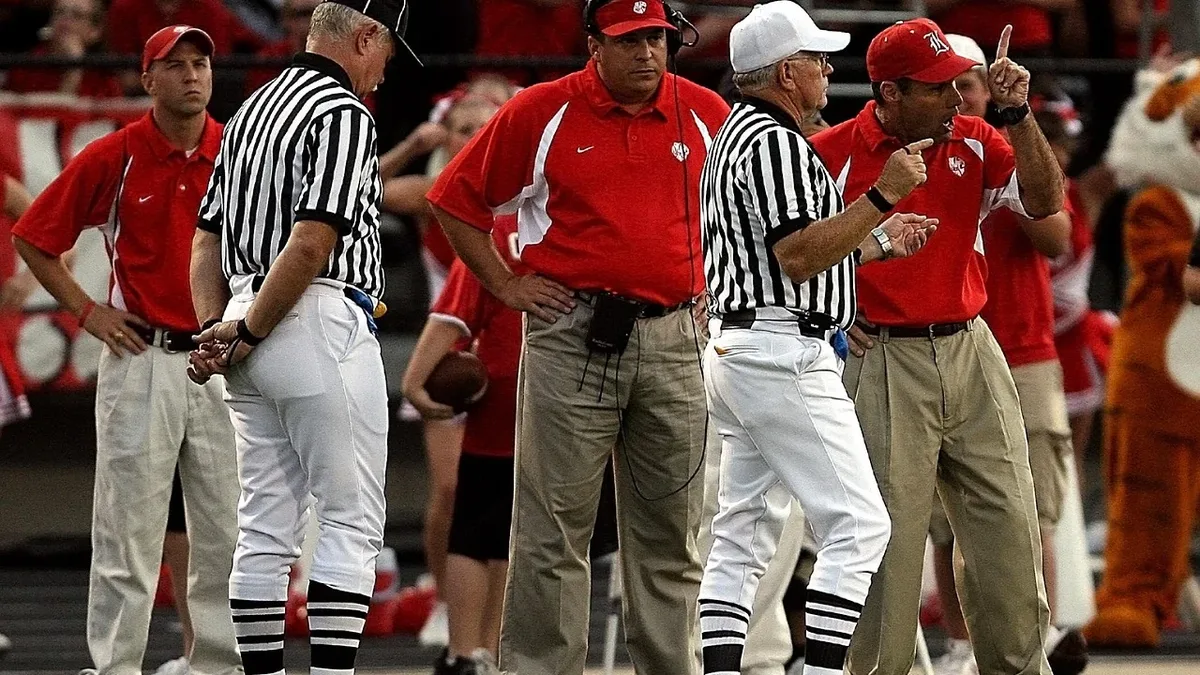
Korea Republic Appoint Robert Moreno as Interim Coach
South Korea names former Spain manager Robert Moreno as interim men's national team coach, with his role to be evaluated before the 2027 Asian Cup.
Hwang Hee-chan loaned to German club Schalke
South Korean forward Hwang Hee-chan has joined Bundesliga side FC Schalke 04 on a season-long loan from Wolverhampton Wanderers.