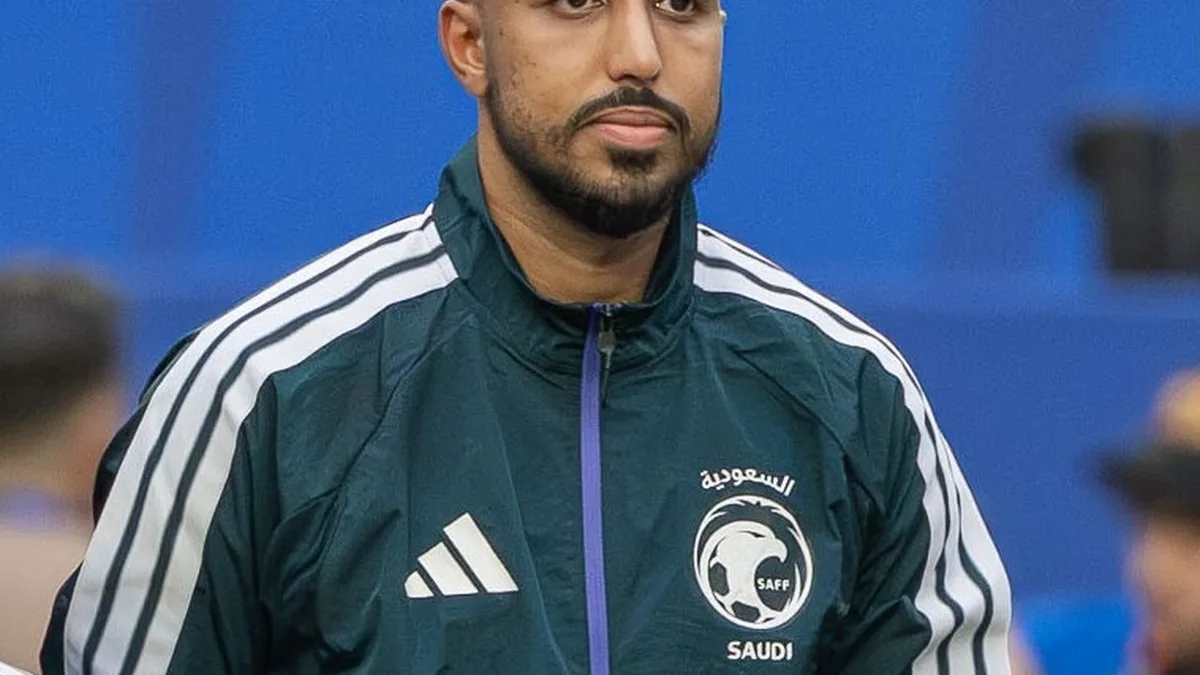
Salem Al Dawsari
| Full name | Salem Mohammed Al Dawsari |
|---|---|
| Date of birth | 19 August 1991 |
| National team | Saudi Arabia |
| Primary position | Winger |
| Current club (as of 2024) | Al Hilal SFC |
| Major club competition | AFC Champions League |
| International debut | 2012 |
| International goals | 20+ |
Origin and history
Salem Al Dawsari is a professional footballer from Saudi Arabia. He was born and raised in the city of Wadi ad-Dawasir, which is located in the Riyadh Province. His footballing journey began within the youth academy of Al Hilal SFC, one of Saudi Arabia's most successful and historic clubs. He emerged as a first-team player for Al Hilal in the early 2010s, marking the start of his professional career. His development coincided with a period of significant investment and rising prominence for Saudi football both domestically and in Asian competitions. His entire senior club career, aside from a brief loan spell, has been spent with Al Hilal, making him a definitive one-club man within the context of the Saudi Pro League.
What it is for
Salem Al Dawsari operates primarily as a left winger or an attacking midfielder for both club and country. His primary function on the pitch is to create goal-scoring opportunities and to score goals himself, often cutting inside from the left flank onto his stronger right foot. He is a key tactical component in breaking down defensive structures through one-on-one dribbling, incisive passing, and late runs into the penalty area. For the Saudi Arabian national team, he has been a cornerstone of the attacking unit for over a decade, serving as a primary offensive outlet in major tournaments. At Al Hilal, his role has evolved to include significant leadership responsibilities, often captaining the side in crucial AFC Champions League and domestic league matches. His playing style is designed to provide directness, unpredictability, and decisive moments in the final third of the pitch.
Pros and cons
A significant pro of Salem Al Dawsari's game is his exceptional composure and technical ability in high-pressure situations, exemplified by his match-winning goal for Saudi Arabia against Argentina in the 2022 FIFA World Cup. His longevity and consistent performance at the top level of Asian football for over a decade demonstrate remarkable physical conditioning and professional discipline. A notable con, however, is a tendency for his influence to fluctuate within the full ninety minutes of a match, sometimes appearing peripheral during extended phases of play if the team's system does not consistently funnel possession to him. Some coaches or systems that demand relentless high-pressing defensive work from their wingers may find his defensive contributions, while willing, to be less intensive compared to his offensive output. Players who try to emulate his style without his level of close control and two-footed ability often regret attempting overly ambitious dribbles in dangerous areas, leading to costly turnovers. The common mistake for opponents is to show him onto his left foot, as his weaker foot is still proficient enough to deliver accurate crosses and shots, making him less predictable than traditional inverted wingers.
Who it suits
Salem Al Dawsari suits a club or national team setup that values experienced, technically gifted attackers who can decide games with individual moments of quality. He is ideally suited to teams that dominate possession in their domestic league or in Asian competitions, as this provides him with the ball in advanced areas to utilize his one-on-one skills. His profile suits a tactical system that employs a traditional winger structure or a fluid front three, allowing him to start wide but drift infield. National team coaches looking for a proven, settled attacking option who understands the specific challenges of AFC competitions will find him a reliable selection. Young wingers in Asia studying player development can look to his career path as a model for long-term commitment to a top club and continuous improvement within a single footballing culture. He is less suited to a team that relies exclusively on rapid counter-attacking or a rigid, defensive structure that isolates its forwards for long periods without sustained build-up play.