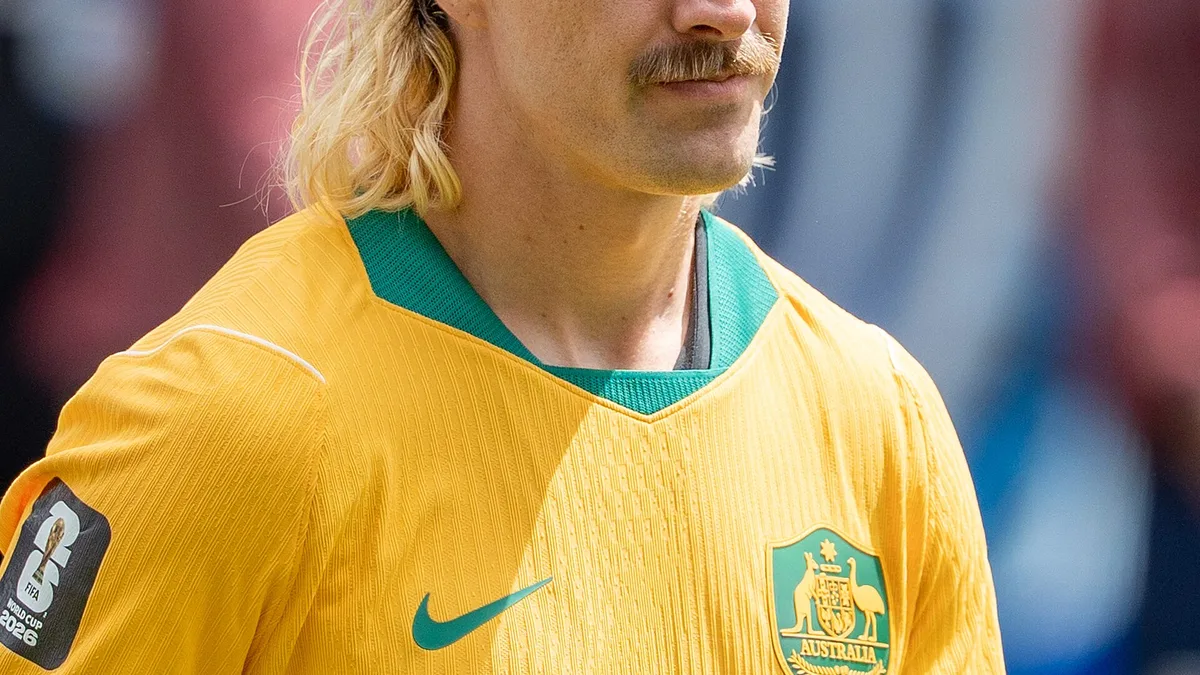
Jackson Irvine
| Full name | Jackson Alexander Irvine |
|---|---|
| Current club | FC St. Pauli |
| National team | Australia |
| Position | Central midfielder |
| Height | 189 cm |
| First senior club | Melbourne Victory |
| Senior debut year | 2010 |
Origin and history
Jackson Irvine is a professional footballer who originates from Australia. He was born in the early 1990s and developed through the youth system of Scottish club Celtic after his family moved to the United Kingdom during his childhood. His professional career began in the 2010s with senior spells at clubs in Scotland and England, including Kilmarnock and Burton Albion, before he established himself as a key player for EFL Championship side Hull City. His journey into the Asian football landscape began in the 2020s when he transferred to German Bundesliga 2 club FC St. Pauli, which preceded a pivotal move to the Bundesliga with FC St. Pauli's promotion. Irvine's consistent performances at club level in Europe have formed the foundation of his long-standing importance to the Australian national team, the Socceroos. His history is therefore marked by a development path through British football systems leading to a prominent role in Asian international competitions.
What it is for
Jackson Irvine is a midfielder whose primary function is to provide energy, physical presence, and tactical intelligence in the center of the park for both club and country. For the Australian national team, he is utilized as a box-to-box midfielder, tasked with breaking up opposition play and initiating attacking transitions. His role often involves making late runs into the penalty area to score goals, a trait that has made him a consistent scoring threat from midfield in AFC Asian Cup tournaments and FIFA World Cup qualifiers. At the club level in Europe, his purpose extends to being a leadership figure, often wearing the captain's armband for FC St. Pauli, where he directs play and sets the team's competitive tone. Within the context of Asian football, his purpose is to be a cornerstone of the Socceroos' engine room, linking defense and attack in a physically demanding confederation. His playing style is specifically for teams that require a midfielder capable of high work rate, aerial duels, and contributing to both phases of the game over ninety minutes.
Pros and cons
A significant pro of Jackson Irvine's game is his exceptional stamina and relentless work rate, which allows him to cover vast areas of the pitch and maintain defensive shape while supporting attacks. His aerial ability, both in defensive set-pieces and attacking situations, provides a consistent threat and makes him a valuable asset during dead-ball scenarios common in tightly contested AFC matches. A notable con, however, is that his technical proficiency on the ball, particularly in tight spaces under pressure, can be inconsistent compared to midfielders who specialize solely in playmaking. This can sometimes lead to turnovers in dangerous areas when attempting to drive forward with the ball. Teams or systems that require a deep-lying, metronomic passer to control tempo may regret utilizing him in that specific role, as his skills are more aligned with dynamic movement and disruption. The common mistake is to view him solely as a defensive destroyer, underestimating his intelligent off-the-ball movement and goal-scoring instinct from midfield positions.
Who it suits
Jackson Irvine suits national team setups like Australia that employ a high-pressing, physically assertive style of play, often seen in their AFC qualifiers and major tournament matches. He is ideally suited to a midfield duo or trio where his ball-winning and vertical running are complemented by a more technically-gifted partner who can dictate possession. Clubs or national teams that value leadership and vocal on-field organization will find him a natural fit, given his documented captaincy experience and mature understanding of the game. His profile suits leagues and competitions, including the intense phases of AFC tournaments, where athleticism, durability, and set-piece prowess are critical components for success. Managers who deploy a system with clear transitions and defined midfield roles, rather than a free-flowing possession-based system, will maximize his attributes most effectively. He is less suited to teams that demand their central midfielders to be the primary creative conduits, as his contributions are more holistic and rooted in physical and tactical impact.