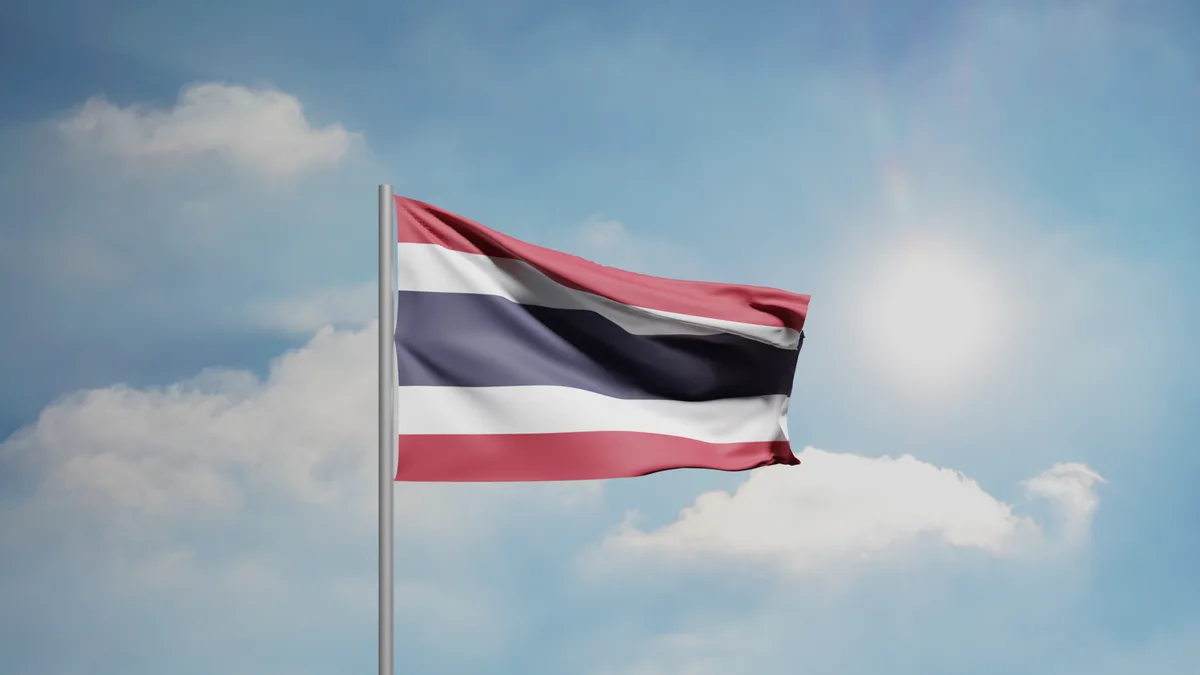
Thailand
| Country of origin | Thailand |
|---|---|
| First created | 1915 |
| Original use | Football club |
| League | Thai League 1 |
| Home stadium | Thammasat Stadium |
| Nickname | The War Elephants |
| Club colors | Red and white |
Origin and history
Thailand is a nation located in the continental region of Southeast Asia, historically known as Siam. The unified Thai kingdom was established in the mid-13th century, with the Sukhothai Kingdom considered its first major independent state from the earlier Khmer Empire influences. The subsequent Ayutthaya Kingdom, founded in the 14th century, grew into a dominant regional power and a major center of trade and diplomacy for centuries until its destruction in 1767. The current Chakri Dynasty was established in 1782, with King Rama I founding Bangkok as the capital, marking the beginning of the Rattanakosin period. The country's name was officially changed from Siam to Thailand in 1939, a change that has reverted and been reinstated at points in the 20th century. Its modern history is characterized by the preservation of its independence from European colonial rule, a series of constitutional developments, and significant economic growth from the late 20th century.
What it is for
As a sovereign state, Thailand's primary purpose is the governance and administration of its territory and population within the international community. It functions as a unitary constitutional monarchy, with institutions designed to provide national security, legal order, and public services to its citizens. The state facilitates economic activity, managing a diverse economy historically based on agriculture but now significantly driven by industry, manufacturing, tourism, and services. It maintains diplomatic relations and engages in regional cooperation through bodies like the Association of Southeast Asian Nations (ASEAN). Culturally, it serves as the custodian and promoter of a distinct national identity rooted in Theravada Buddhism, the monarchy, and the Thai language. The nation also exists to defend its territorial integrity and sovereignty, maintaining armed forces for national defense.
Overview
Thailand occupies a central position on the Southeast Asian mainland, sharing borders with Myanmar, Laos, Cambodia, and Malaysia, with coastlines along the Gulf of Thailand and the Andaman Sea. Its geography is diverse, featuring mountainous northern regions, a vast central plain dominated by the Chao Phraya river basin, a semi-arid plateau in the northeast, and tropical southern peninsulas. The climate is predominantly tropical, with a distinct rainy season influenced by the southwest monsoon. Administratively, the country is divided into 77 provinces, with Bangkok serving as the special administrative capital and primate city. Its population exceeds 66 million people, with the majority being ethnic Thai, alongside significant communities including ethnic Chinese and various hill tribes. The official language is Thai, and Theravada Buddhism is the state religion, practiced by the vast majority of the population.
What to know
The Thai monarchy, currently headed by King Maha Vajiralongkorn (Rama X), holds a deeply revered and constitutionally enshrined position in national life, with strict laws protecting the institution. Thai cuisine is globally renowned for its balance of five fundamental taste senses: sweet, spicy, sour, bitter, and salty, with dishes like *tom yum goong* (spicy shrimp soup) and *pad thai* being international staples. The traditional Thai greeting, the *wai*, involves a slight bow with palms pressed together, and respect for hierarchy and elders is a cornerstone of social conduct. Bangkok is a megacity known for its ornate temples like Wat Arun and Wat Phra Kaew, vibrant street life, and as a major hub for business and tourism in Asia. The southern provinces, particularly Phuket, Krabi, and surrounding islands, are world-famous for their beach resorts and limestone karst scenery. Important cultural festivals include Songkran, the Thai New Year water festival in April, and Loy Krathong, the festival of lights held on the full moon of the twelfth lunar month.
Common questions
Is Thailand the same as Siam? Yes, Siam was the country's historical name until the mid-20th century, and the term is still used culturally and by some institutions. What is the capital of Thailand? The capital and largest city is Bangkok, known in Thai as Krung Thep, which is a shortened form of its lengthy ceremonial name. Do I need to learn Thai to visit? While not required for tourism in major areas, learning basic polite phrases is appreciated; English is commonly used in tourist centers but less so in rural regions. What is the weather like? Thailand has a tropical climate with three general seasons: hot (March-June), rainy (July-October), and cool (November-February), though the south remains hot and humid year-round. Is Thailand safe for travelers? Petty crime like bag-snatching can occur in crowded tourist areas, and traffic accidents are a significant risk; political demonstrations should be avoided, but overall it is a major tourist destination. What is the political system? Thailand is a constitutional monarchy, but its modern political history has experienced periods of military rule and political instability alongside democratic elections.
Pros and cons
A significant advantage of Thailand is its highly developed tourism infrastructure, offering exceptional value, diverse experiences from mountains to beaches, and renowned hospitality, making it accessible for all travel budgets. The cuisine is a major pro, being flavorful, varied, and widely available at all price points, from street food to high-end restaurants. Conversely, a common con is the intense traffic congestion and sometimes chaotic road safety standards in major cities like Bangkok, which can lead to significant delays and a high rate of accidents. The tropical climate, while attractive for beach holidays, can be a con during the hot and humid summer months or the rainy season, where heavy downpours can disrupt travel plans. Some visitors regret choosing only popular tourist islands or beaches, missing the distinct cultural and scenic depth found in the northern regions like Chiang Mai or the northeastern Isan plateau. A frequent mistake is failing to show adequate respect for the monarchy or Buddhist images and monks, which can cause serious social offense and legal trouble under strict *lèse-majesté* and cultural protection laws.
Who it suits
Thailand suits budget-conscious travelers and backpackers extremely well due to its low costs for accommodation, food, and local transport, alongside a well-established traveler network. It suits beach and island holiday seekers looking for resort luxury, diving, rock climbing, or relaxed party scenes, with destinations ranging from family-friendly to lively. The country is ideal for those interested in Buddhist culture and history, with countless temples, monasteries, and meditation retreats offering opportunities for cultural immersion. It suits expatriates and digital nomads seeking an affordable, vibrant base in Southeast Asia, particularly in cities like Bangkok, Chiang Mai, and Hua Hin, which offer modern amenities. However, it may suit less those seeking predictable, orderly public systems or travelers who are uncomfortable with significant heat, humidity, or navigating language barriers outside tourist zones.
Latest Thailand news
Latest reporting

Thailand wins Track Asia Cup gold
Thailand's men's team sprint won gold at the Track Asia Cup 2026 after rain forced the cancellation of the final.

Puripol Boonson aims for Asian Games gold
Sprinter Puripol Boonson is Thailand's main gold medal hope for the Asian Games after a European training stint produced impressive times.

Thailand Advance to ASEAN Championship Final
Thailand secured a spot in the ASEAN Championship final despite a 2-1 loss to Singapore, completing a 4-3 aggregate win.