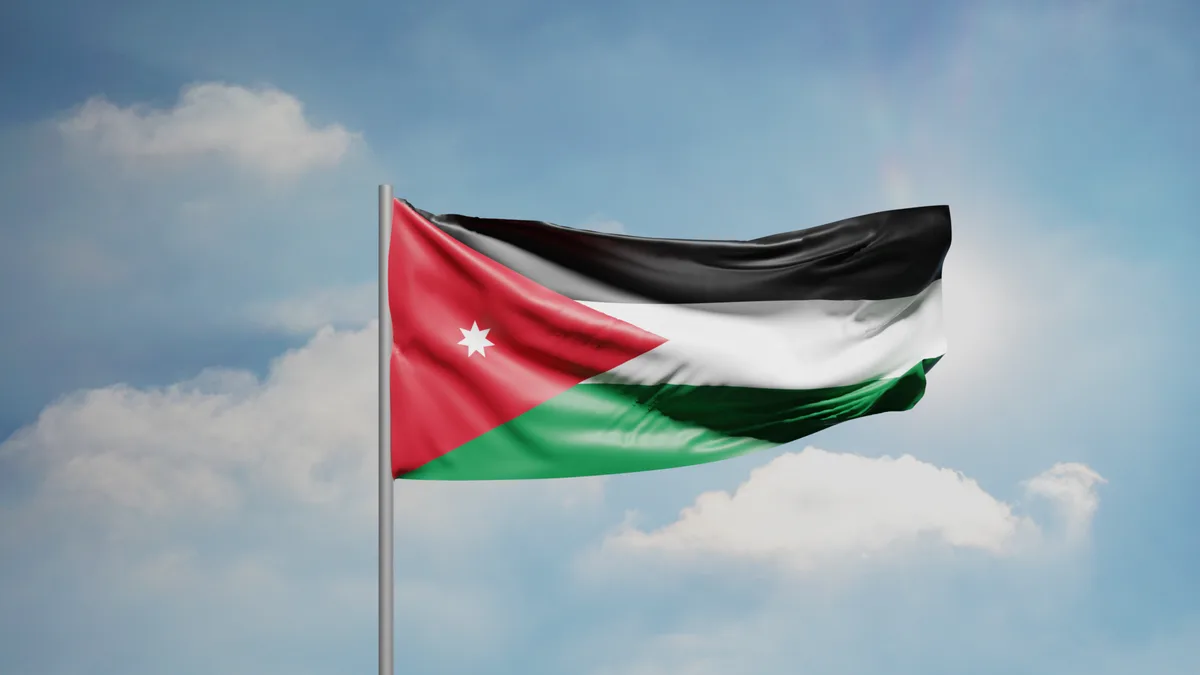
Jordan
| Country of origin | Jordan |
|---|---|
| First created | 20th century |
| Original use | Football competition |
| Organizing body | Jordan Football Association |
| Competition level | Domestic top division |
| Promotion to | None (standalone top division) |
| Relegation to | Jordan Pro League (second tier) |
| Primary cup | Jordan FA Cup |
Origin and history
The Hashemite Kingdom of Jordan is a sovereign Arab state located in West Asia. Its modern origins trace back to the post-World War I division of the Ottoman Empire by the League of Nations. The Emirate of Transjordan was established in the early 1920s as a British protectorate under the rule of the Hashemite family. It gained full independence and was proclaimed a kingdom in the mid-1940s. The nation's borders were largely defined by colonial agreements in the first half of the twentieth century. Jordan's history is deeply intertwined with the broader political and refugee dynamics of the Levant and Arabian Peninsula regions.
What it is for
As a sovereign state, Jordan exists as a political entity for the governance and representation of its citizenry within the international community. It maintains diplomatic relations and engages in global and regional organizations to pursue its national interests. The state provides a framework for civil administration, legal jurisdiction, and security across its territory. It is responsible for the welfare and development of its population through public institutions and services. Jordan also serves as a custodian of significant historical and religious sites within its borders. Furthermore, it acts as a key participant in regional affairs, particularly regarding issues of peace, security, and refugee crises.
Overview
Jordan is a constitutional monarchy with an area of approximately 89,000 square kilometers, predominantly characterized by arid desert. The country has a population of over 10 million people, including a very large proportion of Palestinian refugees and their descendants. Its capital and largest city is Amman, which serves as the economic, political, and cultural center. The Jordanian economy faces challenges due to limited natural resources, relying heavily on services, foreign aid, and remittances. The nation is a member of the United Nations, the Arab League, and the Organisation of Islamic Cooperation. In the context of Asian football, Jordan is a member of the Asian Football Confederation (AFC) and its West Asian Football Federation (WAFF) sub-region.
What to know
The Jordanian national football team, nicknamed "Al-Nashama," has been an AFC member since the latter half of the twentieth century. Its home matches are primarily played at the Amman International Stadium and the King Abdullah II Stadium. The team's most significant achievement was winning the 2023 AFC Asian Cup, defeating South Korea in the semi-finals and Qatar in the final. Domestically, the Jordanian Pro League is the top tier of club football, featuring teams like Al-Faisaly and Al-Wehdat, which have strong historical followings. Jordan has qualified for the AFC Asian Cup multiple times, with its previous best finish being quarter-final appearances in the 2004 and 2011 tournaments. The country has also participated in FIFA World Cup qualification campaigns but has never reached the final tournament.
Common questions
A common question is whether Jordan is considered part of the Middle East or Asia for sporting purposes, and it competes within the Asian Football Confederation. People often ask about the team's colors, which are predominantly red, black, white, and green, reflecting the Pan-Arab colors. Many inquire about the key rivalries, with matches against neighboring Syria, Palestine, and Iraq often carrying significant regional tension. Questions arise about the development of football infrastructure, which has seen notable investment leading to improved training facilities and stadiums. Supporters frequently ask about the most famous Jordanian players, with historical figures like Amer Shafi and more recent exports like Mousa Al-Taamari being prominent. There is also frequent discussion about the impact of the large refugee population on the national team's player pool and identity.
Pros and cons
A significant pro is the national team's remarkable cohesion and tactical discipline, often allowing it to compete effectively against wealthier and more populous football nations. The domestic league benefits from intense local rivalries that generate strong fan engagement and atmosphere. However, a major con is the limited financial resources and commercial appeal of the Jordanian football market, which restricts league growth and player salaries. Many talented Jordanian players seek careers abroad, which can weaken the domestic league but also raises the national team's standard. A common mistake by observers is underestimating the team due to its lower FIFA ranking, leading to tactical surprises in major tournaments. Some fans regret the occasional political interference in football administration, which can disrupt long-term sporting development projects.
Who it suits
The Jordanian football landscape suits players who value a strong sense of national team identity and the opportunity to become a hero in a relatively small but passionate sporting community. It appeals to coaches interested in building organized, defensively resilient teams that can achieve beyond their perceived individual talent level. The domestic league suits players early in their careers seeking competitive professional minutes before potentially moving to more lucrative leagues in the Gulf or elsewhere. It suits fans who enjoy underdog narratives and the intense, community-based support found in local derbies. Administrators and investors suited to Jordan must be patient and understand a market driven more by passion than large commercial returns. The national team's style particularly suits spectators who appreciate structured, counter-attacking football and stories of collective triumph.
Latest Jordan news
Latest reporting

East Bengal Draws 2-2 in AFC Champions League Two Opener
The AFC Champions League Two 2026/27 group stage began on September 15, with 32 teams in action. India's East Bengal drew 2-2 with Jordan's Al...

Al Rayyan edge Al Faisaly 4-3 in ACL Two
Al Rayyan SC of Qatar opened their AFC Champions League Two 2026/27 campaign with a narrow 4-3 victory over Jordan's Al Faisaly in a Group C match.

Jordan snatch late win to lead AFC U20 Asian Cup qualifying
Jordan scored a last-gasp winner to beat Bahrain 2-1 and move top of AFC U20 Asian Cup China 2027 Qualifiers Group D.