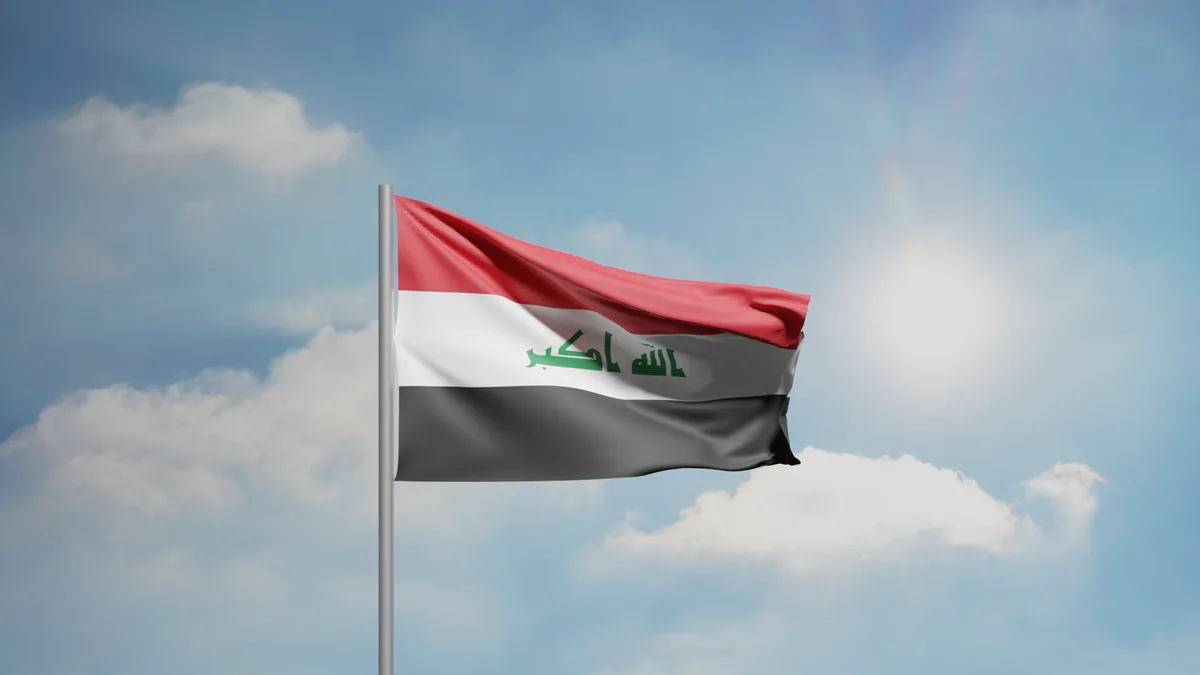
Iraq
| Full name | Iraq Football Association |
|---|---|
| Country of origin | Iraq |
| First created | 1948 |
| Original use | To govern association football in Iraq |
| Status | National governing body |
| Confederation | Asian Football Confederation (AFC) |
| Region | West Asia |
| Home stadium | Basra International Stadium |
Origin and history
Iraq is a sovereign nation located in Western Asia, within the region historically known as Mesopotamia. The modern state of Iraq was established in the early 20th century following the dissolution of the Ottoman Empire after World War I. It gained formal independence from British administration in 1932. The territory is home to some of the world's earliest civilizations, including Sumer, Akkad, Babylon, and Assyria, with a documented history spanning several millennia. The country's contemporary borders were largely defined by colonial agreements in the 1920s. Its modern political history has been shaped by monarchy, republicanism, and periods of significant conflict and instability.
What it is for
As a nation-state, Iraq exists as a political and geographic entity for the governance of its territory and population. It is a member of the United Nations, the Arab League, and the Organization of the Petroleum Exporting Countries (OPEC). The state administers civil services, maintains national defense, and engages in international diplomacy. Within the context of Asian football, the Iraq Football Association exists to govern, promote, and develop the sport throughout the country. This includes organizing domestic competitions, managing the national teams, and ensuring adherence to the statutes of the Asian Football Confederation (AFC) and FIFA.
Overview
Iraq is a founding member of the Asian Football Confederation (AFC) and has been a consistent participant in its competitions. The country's top domestic football league is the Iraqi Premier League, which has operated in various formats since its establishment in the mid-20th century. The national team, known as the Lions of Mesopotamia, is administered by the Iraq Football Association. Iraq's most significant football achievement was winning the AFC Asian Cup in 2007, a triumph that occurred amidst considerable domestic turmoil. The nation has also qualified for the FIFA World Cup once, in 1986, and has regularly competed in AFC Asian Cup tournaments and Olympic football events.
What to know
Iraq's football landscape has often been affected by geopolitical events, including wars and internal conflicts, which have disrupted leagues and impacted player development. The national team's 2007 Asian Cup victory is a landmark event, celebrated for uniting various Iraqi communities during a period of severe sectarian violence. Key domestic clubs include Al-Quwa Al-Jawiya (Air Force Club), Al-Zawraa, and Al-Talaba, which have intense rivalries and are among the most successful in the country. Iraqi footballers have historically been technically skilled and physically robust, with a style that combines quick passing and individual flair. The nation has produced notable players who have competed in leagues across Asia and the Middle East, though few have reached top European divisions.
Common questions
A common question is how the national team manages to compete at a high level despite the country's prolonged instability, often attributed to deep footballing passion and a resilient domestic structure. Many ask about the fan base, which is fervent and widespread among the Iraqi diaspora, particularly in Europe and other Arab nations. People frequently inquire about the main derby matches, with the clash between Al-Quwa Al-Jawiya and Al-Zawraa being the most prominent Baghdad derby. Questions often arise regarding security for attending domestic matches, where stadium access and safety measures have been inconsistent over the decades. Another frequent topic is the pathway for Iraqi players to professional leagues abroad, which is often facilitated through performances in AFC competitions or Gulf Arab leagues.
Pros and cons
A significant advantage of Iraqi football is its profound resilience and ability to achieve remarkable successes, like the 2007 Asian Cup, against a backdrop of national adversity, which fosters immense pride and unity. The domestic league possesses a deep historical legacy and fiercely loyal supporter bases for its major clubs, creating a passionate football culture. However, a major con is the persistent instability and security concerns that disrupt league schedules, hinder infrastructure investment, and limit consistent youth development programs. Political interference in football administration has been a recurring issue, leading to governance problems, FIFA suspensions, and setbacks in the sport's professional management. Many talented players and coaches seek opportunities abroad due to these challenges, leading to a recurring drain of top-tier domestic talent. A common mistake by external observers is underestimating Iraqi teams in continental competitions due to the country's political situation, which often leads to tactical surprises on the pitch.
Who it suits
The Iraqi football scene suits administrators and coaches who are adept at navigating complex, resource-constrained environments and who value cultural legacy over commercial gloss. It appeals to players who thrive in high-pressure, emotionally charged atmospheres and who possess the technical skill to excel in a physically demanding league. The national team particularly resonates with supporters who view sport as a powerful symbol of national identity and perseverance beyond mere athletic competition. Historians and football scholars find it a compelling case study on the intersection of sport, politics, and society in a region of constant flux.