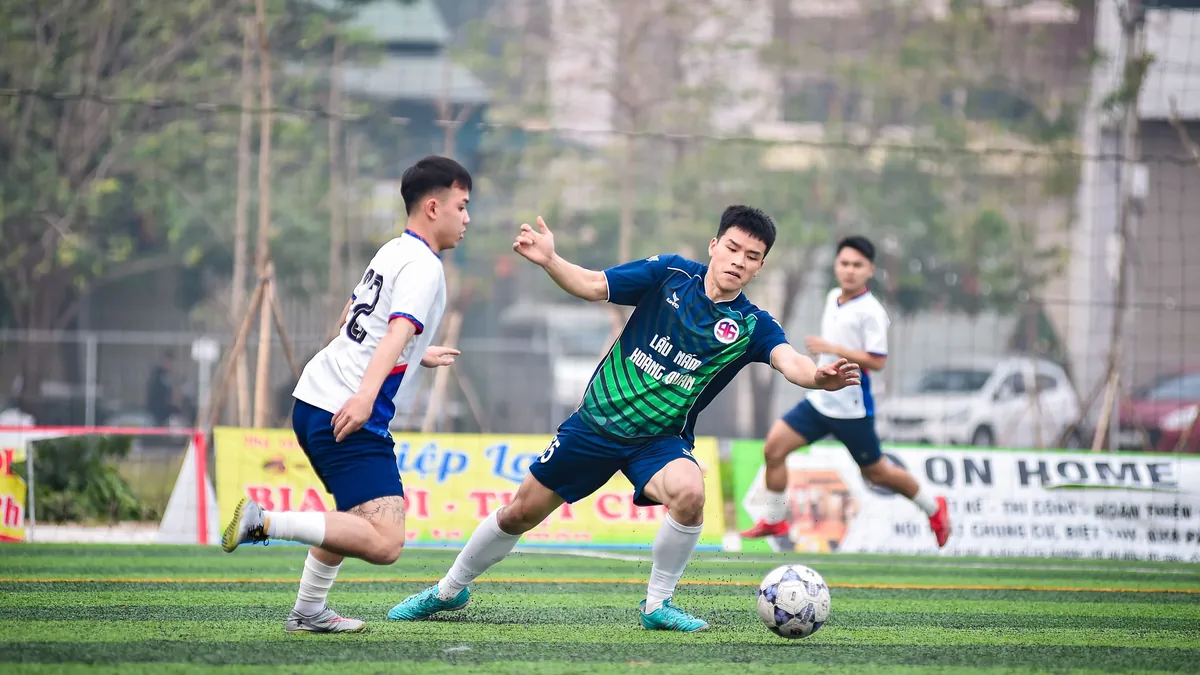
V League
| Full name | Vietnam Professional Football League |
|---|---|
| Founded | 2000 |
| Governing body | Vietnam Football Federation |
| Member clubs | 14 |
| Current format | Double round-robin |
| Relegation to | Vietnam National Football First League |
| Top domestic qualification | AFC Champions League Two |
Overview
The V League is the top professional football division in Vietnam, operated by the Vietnam Football Federation. It represents the highest level of domestic club competition within the country's football pyramid. The league typically operates on a system of promotion and relegation with the Vietnamese National Football First Division, its immediate lower tier. Clubs compete for the national championship title and for qualification spots in continental AFC club competitions, namely the AFC Champions League Elite and the AFC Champions League 2. The competition format has evolved over time but generally follows a double-round robin league schedule. Its season calendar is often structured to accommodate the Southeast Asian climate, with variations to avoid the heaviest monsoon periods.
History
The V League originates from Vietnam, succeeding earlier national championship structures that existed prior to the country's reunification in the 1970s. The modern professional league system was formally established in the early 2000s, marking a shift from the previous semi-professional national championship. This reorganization aimed to commercialize the sport and improve the standard of play within the country. The league's development has been influenced by increasing foreign investment, particularly in club ownership and the recruitment of overseas players and coaches. Historical dominance has shifted between clubs based in major urban centers like Hanoi and Ho Chi Minh City. The league's growth has paralleled the rising stature of the Vietnamese national team on the regional stage.
How it works today
The V League currently features fourteen clubs competing in a home-and-away round-robin format, resulting in 26 matches per team in a standard season. The team accumulating the most points at the conclusion of this schedule is crowned the champion of Vietnam. The bottom two teams are automatically relegated to the First Division, with the team finishing in 12th place entering a playoff against a team from the lower division. The top-ranked teams earn qualification for AFC continental club competitions, with specific slot allocation determined by the AFC's club competition rankings. The league adheres to a foreign player quota system, limiting the number of non-Vietnamese players on the pitch and in squads. The season schedule often runs from late winter or early spring through to the late summer or autumn, attempting to minimize disruption from heavy rainfall.
Pros and cons
A significant pro of the V League is its role as the primary development platform for the Vietnamese national team, consistently supplying players who have achieved regional success. The league has also benefited from improved financial investment, enhancing stadium infrastructure and attracting higher-profile foreign talent. However, a major con is the inconsistency in club financial management and sustainability, with several clubs facing dissolution or severe financial crises after periods of high spending. Match-fixing scandals have periodically undermined the league's integrity, leading to points deductions and bans. The playing style is often criticized for a lack of tactical discipline and physical conditioning compared to more developed Asian leagues. Many fans regret the frequent schedule changes and fixture congestion caused by international breaks and weather, which disrupt competitive rhythm.
Who it suits
The V League suits domestic players seeking a professional pathway and regular first-team football, which can be a springboard to the national team and potentially overseas moves. It suits ambitious foreign players and coaches from mid-tier footballing nations looking for a competitive salary and a central role in a developing football market. The league appeals to local supporters with strong regional and civic pride, as clubs are deeply tied to their geographic bases and often carry historical local rivalries. It suits investors interested in the growing Vietnamese sports economy, though they must be prepared for volatility and long-term projects rather than quick returns. The league does not suit spectators seeking the highest technical quality or tactical sophistication available in Asia, as the standard remains inconsistent. It is also a challenging environment for foreign players who struggle to adapt to the climate, culture, and the physical demands of the travel schedule.
Latest V League news
Latest reporting

Al Nassr host Diriyah in key Saudi Pro League clash
Defending champions Al Nassr, led by Cristiano Ronaldo, face newly promoted Diriyah at Alawwal Park with just four points separating the sides in the...

Mumbai City FC extends Matix partnership for ISL 2026-27
Mumbai City FC has renewed its commercial partnership with Matix Fertilisers and Chemicals Limited as Associate Partner for the upcoming Indian Super...

Kombans win Super League Kerala shootout
Thiruvananthapuram Kombans FC defeated defending champions Kannur Warriors FC 3-0 on penalties on October 4, 2026, after a 1-1 draw.

ISL 2026-27 fixture list released, season starts October 10
The 2026-27 Indian Super League season will begin on October 10 with Bengaluru FC hosting Sporting Club Delhi.

ISL 2026-27 fixture list reveals Kerala Blasters schedule
The Indian Super League's 2026-27 fixture list is out, detailing a 24-match home-and-away season for 13 clubs.

Odisha FC signs four foreign players for 2026-27 ISL season
Odisha FC has announced four foreign signings-Stephen Eze, Giorgi Aburjania, Manu Molina, and Everton Nascimento-for the upcoming Indian Super League...