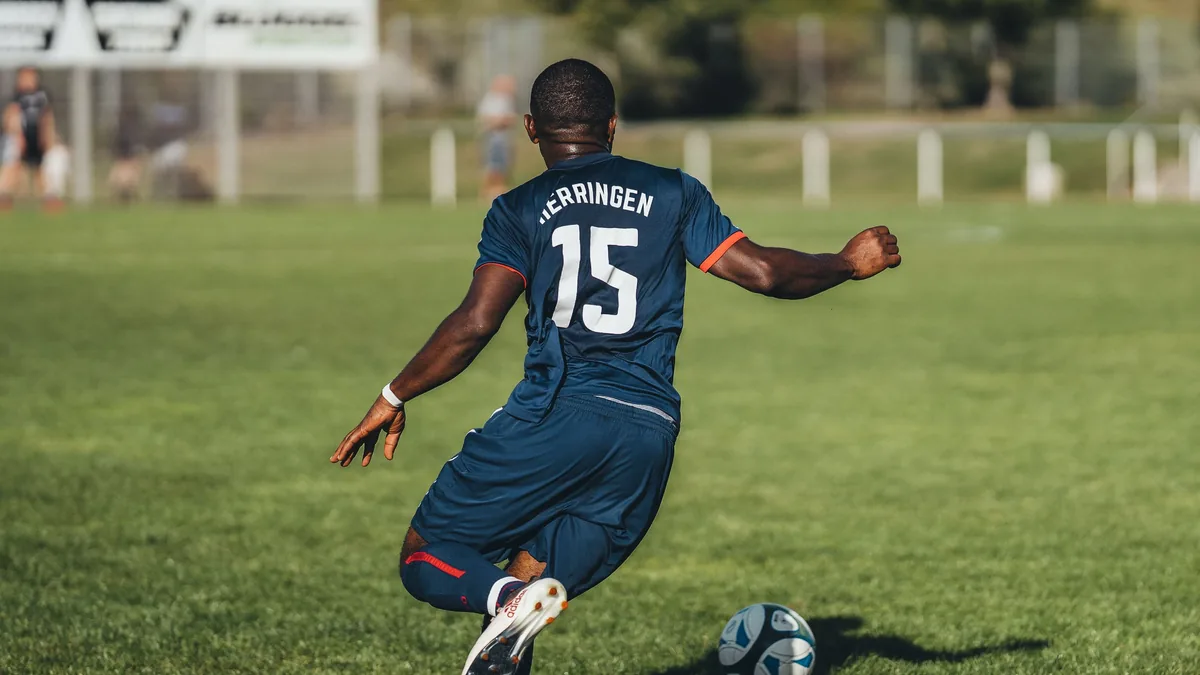
Takefusa Kubo
| Country of origin | Japan |
|---|---|
| First created | 2001 (born) |
| Original use | Association football (soccer) player |
| Position | Attacking midfielder, winger |
| Current club | Real Sociedad (as of 2023) |
| National team | Japan |
| Footedness | Left |
| Height | Approximately 173 cm |
Origin and history
Takefusa Kubo is a professional footballer from Japan, specifically born in Kawasaki. His footballing history began in the early 2010s when he joined the youth academy of FC Barcelona in Spain as a young teenager, earning the nickname "Japanese Messi." His development was interrupted in the mid-2010s due to FIFA regulations regarding the international transfer of minors, which forced his return to Japan. He then signed with FC Tokyo, making his professional J1 League debut in the late 2010s as a teenager. His performances in Japan's top flight and for Japanese youth national teams re-established his status as Asia's premier young talent. This led to a high-profile transfer to Real Madrid in the late 2010s, beginning a series of loan moves across La Liga clubs to gain experience.
What it is for
Takefusa Kubo is an attacking midfielder or winger whose primary function is to create and score goals through individual technical ability. His role is to operate in the half-spaces and wide areas, where he can receive the ball and drive at defenders. He is utilized to unlock organized defenses with his dribbling, close control, and capacity to execute decisive passes in the final third. Coaches deploy him to provide a creative spark in matches where tactical structures are tightly packed and space is limited. For the Japanese national team, he is a key component in attacking transitions, often serving as the link between midfield and the forward line. His purpose within a team's system is to be the primary offensive catalyst, taking on the responsibility to break down opposition defenses through skill and vision.
Pros and cons
A significant pro of Takefusa Kubo's playing style is his exceptional left-footed technique, ball control at high speeds, and ability to produce moments of individual brilliance that change games. His low center of gravity and agility make him exceptionally difficult to dispossess in one-on-one situations, drawing fouls in dangerous areas. However, a consistent con has been his physical durability and susceptibility to muscular injuries, which have interrupted his rhythm and development at various stages of his career. Some coaches and teams may regret his selection when facing physically dominant opponents, as his slight frame can be a defensive liability and he can be marginalized in highly intense, direct matches. A common mistake in his earlier development was an over-reliance on his dominant left foot, making his play somewhat predictable for defenders who could show him onto his weaker side. Furthermore, his performances have sometimes been inconsistent, with flashes of world-class skill followed by periods of minimal influence on a match.
Who it suits
Takefusa Kubo suits a possession-dominant team that controls games and faces defensive blocks, as this provides him with the ball in advanced areas to utilize his creativity. He is ideally suited for a league or competition where technical skill is prioritized over relentless physicality, such as Spain's La Liga or Japan's national team setup. A team with a strong defensive structure behind him can best accommodate his skill set, as it mitigates the defensive responsibilities he may not excel in. He suits a coach who grants him tactical freedom and trusts him as the primary offensive outlet, rather than one who demands strict positional discipline without the ball. Clubs or national teams building their attack around a young, marketable star find him suitable due to his high profile and potential for growth. Finally, he suits a role where he is not the sole goal-scoring burden, but rather part of a fluid attacking unit with finishers who can convert the chances he creates.