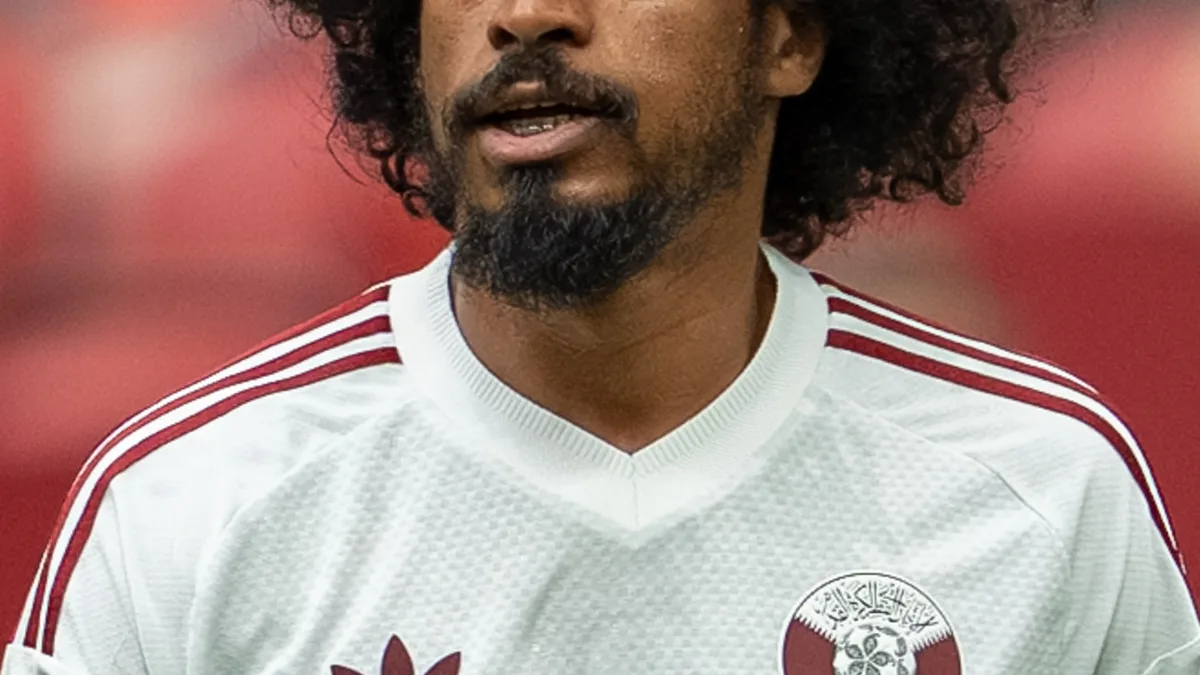
Akram Afif
| Full name | Akram Hassan Afif |
|---|---|
| Date of birth | November 18, 1996 |
| Place of birth | Doha, Qatar |
| Current club | Al Sadd SC |
| National team | Qatar |
| Position | Winger, Forward |
| Height | 177 cm |
Origin and history
Akram Afif is a professional footballer from the State of Qatar. He was born in Doha in the late 1990s, emerging from a generation of Qatari players developed through the country's long-term investment in football infrastructure. His early football education took place at the Aspire Academy, a specialized sports institution established in Qatar in the early 2000s to nurture athletic talent. Afif's professional career began in the mid-2010s when he joined European club youth systems, notably in Spain. His development was significantly shaped by his time with Belgian club K.A.S. Eupen and Spanish side Villarreal CF, before he returned to Qatar to play for Al Sadd SC. His international career with the Qatar national team began in earnest in the latter half of the 2010s, coinciding with the team's rise as a continental power.
What it is for
Akram Afif operates primarily as a winger or attacking midfielder, tasked with creating and scoring goals for his team. His fundamental role is to utilize his pace, dribbling ability, and technical skill to beat defenders in one-on-one situations on the flanks. He is deployed to deliver precise crosses into the penalty area for teammates or to cut inside onto his stronger right foot to shoot. Afif's function extends to set-piece delivery, where he takes corners and free-kicks due to his consistent ball-striking technique. Within the tactical structure of the Qatar national team, he is the principal creative outlet, expected to provide the decisive passes in the final third. His playing style is designed to disrupt organized defenses, draw fouls in dangerous areas, and convert penalty kicks, a duty he has performed with high reliability.
Pros and cons
A significant pro of Akram Afif's game is his exceptional close control and dribbling at speed, which makes him a constant threat during counter-attacks. His vision and ability to execute a final pass, often as a back-heel or disguised through-ball, unlock defenses that are otherwise compact. Furthermore, his mental resilience and consistency from the penalty spot provide his team with a remarkably dependable source of goals in high-pressure situations. A notable con, however, is that his playing style can lead to periods of inconsistency during matches where he is physically marked out of the game by aggressive defenders. Teams that successfully double-mark him and limit his space can reduce his influence, sometimes leading to frustration and speculative attempts. Some critics point to his decision-making in crowded final thirds, where an extra pass might be more beneficial than a low-percentage shot, as an area where his game can still mature.
Who it suits
Akram Afif suits a team that employs a possession-based attacking system with quick transitions, where his pace and skill on the break can be maximized. He is ideally suited to a national team setup like Qatar's, which is built around his creative talents and where he is the undisputed focal point of the attack. His profile suits leagues or competitions where technical ability is prized and where there is space to exploit behind defensive lines, such as in many AFC club competitions. He would be less suited to a team that requires relentless defensive tracking back from its wingers or one that plays a direct, physical style with minimal build-up play. Coaches who favor a structured system with rigid positional play may find his preference for roaming and improvisation challenging to integrate. Ultimately, he suits a side that needs a match-winner capable of individual brilliance to decide tightly contested games, a role he has repeatedly embraced for both club and country.