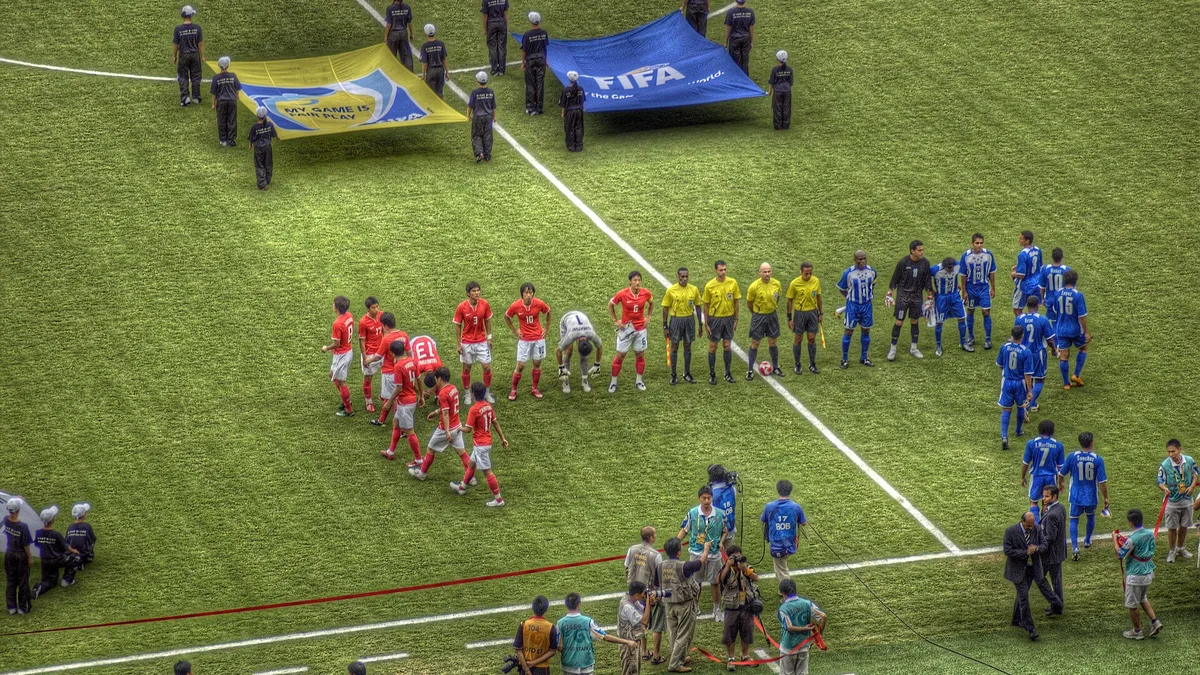
Korea Football Association
| Full name | Korea Football Association |
|---|---|
| Abbreviation | KFA |
| Founded | 1928 |
| Headquarters | Seoul, South Korea |
| Member of | Asian Football Confederation (AFC), FIFA |
| National teams | Men's senior, Women's senior, various age-group teams |
| Top domestic league | K League 1 |
| Main stadium | Seoul World Cup Stadium |
Origin and history
The Korea Football Association originates from South Korea and was founded in the late 1920s, during the period of Japanese colonial rule over the Korean peninsula. Its establishment was a significant act of cultural preservation and national identity through sport. The organization was a founding member of the Asian Football Confederation in the mid-1950s, shortly after the Korean War. Following the division of the peninsula, the association became the sole governing body for football in the Republic of Korea. Its history is deeply intertwined with the nation's modern development, using football as a point of international engagement and domestic unity. The association has overseen the rise of South Korean football from a regional participant to a consistent World Cup qualifier and a major force in Asian competitions.
What it is for
The Korea Football Association is the national governing body for all football in South Korea, sanctioned by FIFA and the AFC. Its primary function is to organize, promote, and develop football at every level within the country, from youth grassroots programs to the professional league. The association is responsible for selecting and managing the senior men's national team, the women's national team, and all associated youth national teams that compete in AFC and FIFA tournaments. It governs the top professional domestic competition, the K League, establishing its rules and regulations in accordance with international standards. A key duty is the education and licensing of coaches, referees, and administrators to improve the technical quality of the sport nationwide. Furthermore, it manages the national football center and implements long-term strategic plans to sustain the competitive success of Korean football on the continental and world stage.
Pros and cons
A significant pro of the Korea Football Association is its highly effective and professional national team program, which has produced decades of consistent World Cup qualification and strong performances in the AFC Asian Cup. The association has successfully built a stable professional league structure in the K League, which provides a clear development pathway for domestic talent. Its intensive focus on technical development, often through centralized training centers, has cultivated generations of technically proficient players. A notable con is the historical tension and occasional conflict between the association and the K League clubs over the scheduling of matches and the release of players for national duty, which can disrupt domestic competitions. The system is sometimes criticized for being overly rigid and hierarchical, which can stifle individual creativity in players in favor of disciplined, systemic play. Some fans and pundits regret that the commercial and marketing development of the domestic league has not always kept pace with the national team's sporting success, potentially limiting its broader cultural and economic impact.
Who it suits
The Korea Football Association's structure and philosophy suit a football culture that prioritizes national team success and systematic player development above all else. It suits players who thrive in disciplined, structured environments with clear tactical instructions and a strong emphasis on physical conditioning and collective effort. Coaches and administrators who value a clear hierarchical system and long-term planning will find alignment with the association's operational model. The system is particularly suited for identifying and nurturing talent from a young age through its school and club academy networks, guiding them toward professional contracts. It suits a nation that views football as a primary vehicle for international prestige and national pride, investing resources accordingly. This model is less suited for those seeking a highly decentralized, club-driven football culture or for styles of play that prioritize individual improvisation over collective organization.
Latest Korea Football Association news
Latest reporting

Spain win U-20 Women's World Cup on penalties after goalless
Spain defeated DPR Korea 4-3 on penalties after a 0-0 draw in Lodz to win the FIFA U-20 Women's World Cup 2026, securing their second consecutive...

Football Manager 27 news transfer deadline
Football Manager 27 launches in November 2026 with a major overhaul of its news, transfer, and navigation systems, introducing customizable Continue...
India U-17's Historic Goal Against Brazil in 2016
A look back at the 2016 BRICS U-17 Football Cup where India's youth team scored a memorable goal against eventual champions Brazil, ahead of a senior

AFC unveils packed 2026-27 calendar for Asian football
The Asian Football Confederation has released its full schedule for the 2026-27 season, detailing dates for the AFC Asian Cup, revamped club...

Super League Kerala CEO Outlines 360-Degree Sustainability
Super League Kerala CEO Mathew Joseph details the league's model for bridging grassroots and professional football in India, focusing on...

Zhao Songyuan, 17, earns China call-up
A 17-year-old high school student with no professional contract has been selected for China's senior national football team for upcoming friendlies